Why are my customers going to my competitors?
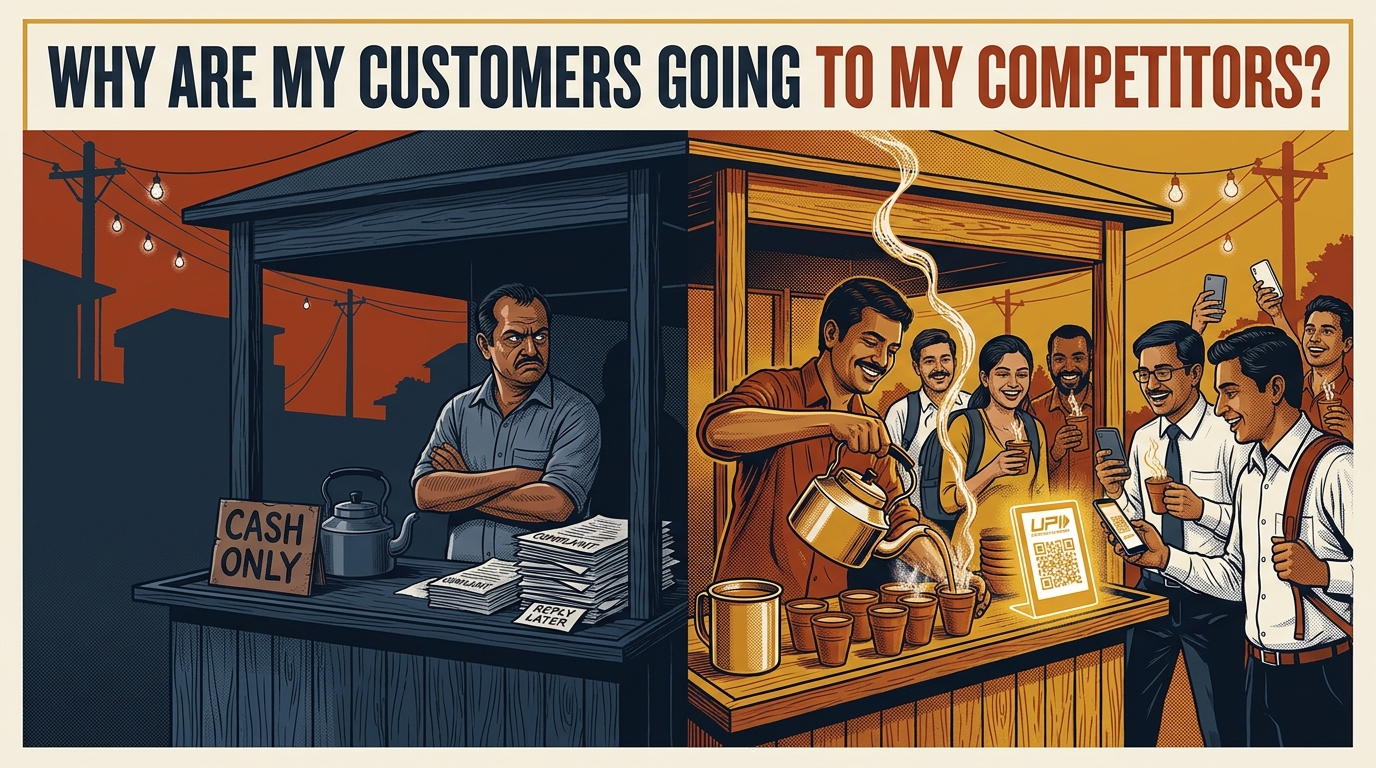
Have you ever noticed while crossing down the streets how two tea stalls can be right next to each other, selling almost the same chai at the same price, yet one stall is always crowded while the other is struggling to get customers and earning less? Have you ever thought about finding out the differences?
The secret lies in the little things the owner does every single day that most people rarely notice. Yes, of course businesses don’t always lose customers because they have a bad product. Sometimes, the reason lies behind the very few habits they refuse to fix.
1. Waiting for Everything to Be Perfect
When you are planning to start a business, you always pay more attention towards building a perfect logo, a perfect website, the perfect product packaging etc. You constantly keep yourself so rigid towards planning, changing things and waiting until everything feels top notch.
Meanwhile, your competitors have already launched with something that isn’t even half as polished as yours. They’ve of course made mistakes several times but still figured out the marketing game while you are still stuck about picking the right time to start. If you want to really grow, you have to stop overthinking and actually start. Your first version doesn’t have to be perfect. It just has to be present in the market.
2. Replying Too Slowly
Imagine messaging a business to ask about a product while getting no reply for an entire day and then after a week finally receiving, “Hello, how can we help you?” Definitely you won’t be interested anymore, right?
You need to understand that customers don’t sit around waiting for businesses to respond. They just simply move on. There are ten other options in the market and one of them will surely reply on time before you do. You might have the best product at better pricing and better quality, but none of that matters when the customer has already bought from someone else. A quick reply isn’t some revolutionary business strategy. It’s basic courtesy you need to understand, and surely it gives businesses a great advantage.
3. Treating Every Complaint as an Attack
You need to get it straight that not every complaint means your customer is right, but that doesn’t mean every complaint should be ignored either. When a customer tells you about your delivery being late or someone else mentions that your product isn’t worth the price, instead of asking what went wrong, you immediately start explaining why it wasn’t your fault.
Yes, we all have been in this defensive mode at some point. But if every piece of feedback feels like an attack on your business, you will never know what actually needs fixing. It can be your customers are literally telling you why they might not come back. So, you should probably listen with patience first before losing the customers.
4. Having Nothing That Sets You Apart
When someone asks why they should buy from you and your only answer is, “We offer good quality at affordable prices,” in that case you definitely have a problem. Selling at lowest rates can get you customers. It’s true, but it doesn’t always make them stay for a long time. Maybe you deliver faster, have better services, but there needs to be something.
If people cannot tell the difference between you and your competitor, they will eventually make their decision based on price, convenience or whichever business they notice at first.
5. Refusing to Change
Lastly, there’s the mindset of refusing to change because the old way still works. This one is probably the most dangerous.
Remember that customers change, and technology changes every single day. The way people discover, compare and buy products changes and your competitors change, too. For example, the shop that refused to accept online payments probably didn’t think UPI would make much difference either. Until customers started choosing the shop that made paying easier. You really don’t have to change everything every other year. But being unwilling to change anything is a different problem altogether.
You might just need to fix what’s already in front of you. Because sometimes, the reason your competitor is doing better isn’t that they’re doing something extraordinary. They’re just doing the things you’re not.
Fix even one of them this week, and you’ll feel the difference far sooner than you expect.
Written by Diya