Studying Psychology Before an MBA Can Help You Grow a Business and Make More Money
Let’s be real, these days everyone seems to be chasing their dream of starting their own business or jumping straight into the big corporate world.Whether getting an idea to become an entrepreneur or climbing up the corporate ladder, everyone’s looking for their own way to make it big. But there is one thing that people often overlook in this rat race,that every business whether it is big or small is built on understanding people, and that’s where having a psychology degree before an MBA can be a total game changer.
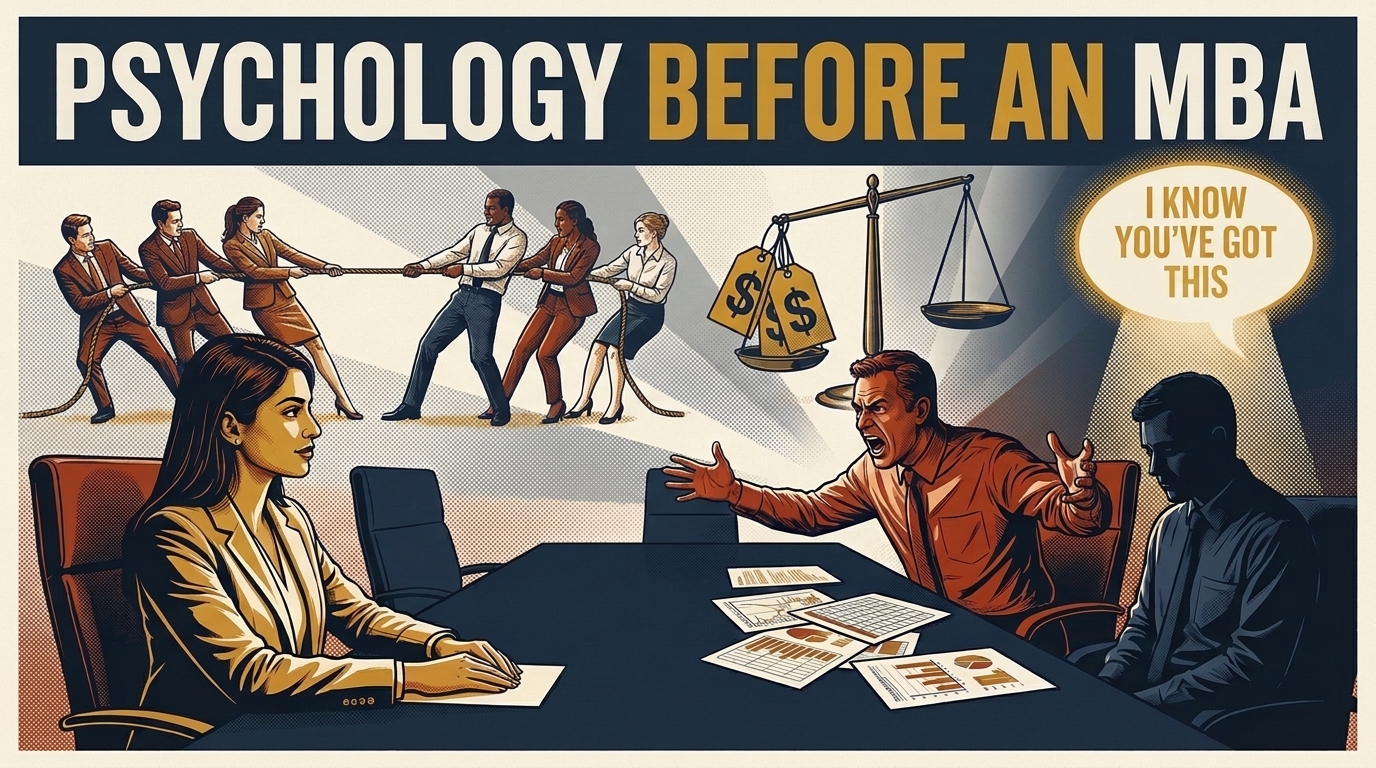
Students believe that MBA can be their best place where one learns about how business works, but when someone will get into the real world field they will explore that business is just two or more wise people making decisions together and that is what a psychology degree teaches you before you step into a boardroom. Imagine a team meeting where one employee barely speaks, while another dominates the entire conversation. If someone observes it with a typical business perspective, they might see the first as lacking confidence and the second as a natural leader. But studying psychology encourages you to look deeper into the matter. Is the quiet employee afraid of being judged or uncomfortable speaking in a group? Is the outspoken employee genuinely confident, or seeking validation? Suddenly, the same meeting becomes a practical lesson in human behaviour, communication and leadership.But someone with a psychology background will recognize this as social loafing, a concept researchers like Ringelmann first noticed when he saw that people pull less hard on a rope as the group gets bigger or if we consider Maslow’s hierarchy of needs we understand that a good manager knows that an employee who is worried about losing their job won’t be motivated by big promises or fancy speeches. They need to feel secure first. These are not the simple ,boring lessons one learns for an exam and forget later. These theories simply become a part of how you understand people and situations.Therefore when you will eventually enter into a business classroom and study about the subject Organisational Behaviour,the concepts won’t feel entirely new. You will already have an idea in them and will feel easier to connect theories with real world business situations which just gives you a real fresh head to start.
The other benefit would be that the subject psychology trains you to question your own thinking and vision, something that most business courses assume or believe you already do well. Earlier famous personalities like Daniel Kahneman and Amos Tversky showed us how often our judgment is bent by shortcuts, like anchoring, where the first number we hear quietly shapes every decision that follows. Let’s say you’re negotiating your salary or deciding the price of a product. Someone who understands anchoring bias knows how the first number can influence the entire negotiation, so they use it strategically rather than letting it work against them.Then lets come to confirmation bias, which is basically believing you’re right and only looking for the information that proves your point. Sounds familiar right? This is exactly how businesses sometimes make bad decisions, launch products nobody wants or waste money on marketing campaigns without a proper plan that simply doesn’t work.
Now when you study psychology, you spend years understanding these patterns, questioning assumptions and learning to look at situations from different angles. So, when you enter the business world, you don’t just analyse numbers; you also question the thinking behind those numbers.This is the reason behind simply justifing the statement that “An MBA teaches you how to make business decisions and Psychology teaches you to question the mind making those decisions.”
Here’s the thing that anyone can manage deadlines, assign tasks and keep a spreadsheet in check. But can you handle different personalities, understand what makes people tick and figure out why one employee thrives while another struggles? That’s a whole different skill set. The best managers don’t just know how to run a business; they know how to read people. And honestly, that’s where psychology gives you an unfair advantage.
According to Herzberg’s two-factor theory, let’s get one thing straight that a great salary hike might make an employee happier on payday, but it doesn’t automatically make them love showing up to work every Monday .People want more than money that’s true but they also want to feel valued, have room to grow and know that what they do actually matters to them and others .Overhere Psychology explains “WHY?” Now take Bandura’s concept of self efficacy. It’s basically about how believing you can do something influences how well you actually do it. Sometimes, one mentor saying, ‘I KNOW YOU HAVE GOT THIS’ can give someone the most satisfaction and confidence to take a completely different direction into their career.
Now, imagine when you are bringing that mindset into an MBA classroom. You’re not just looking at spreadsheets and business strategies; you’re wisely connecting the dots that others might miss.Example a merger that went downhill? Maybe the two company cultures couldn’t get along. A brand that suddenly became everyone’s favourite? Maybe you simply understood the reason behind what people wanted better than its competitors.Because at the end behind every business decision, there’s a human decision. And knowing how to read that difference? That’s a real business superpower.
Coming to the best part, Psychology doesn’t just teach you how to understand other people; it just helps you understand yourself, too. You become more aware of your reactions, more patient with different personalities and better at handling situations without losing your cool.These can be the beneficial qualities that really matter when you’re in a leadership position.So, by the time you pursue an MBA, you’re not starting from zero. You’re bringing something valuable to the table.Now before we wrap up, let’s be clear. No, studying psychology doesn’t mean you can read minds, predict someone’s next move, decode every WhatsApp text or magically know why your boss said, ‘We need to talk’.
“You don’t need to be a mind reader to become a great leader. Sometimes, you just need to understand people a little better than the person sitting across the table.” — Diya Das
Writer & Founder, www.diyainscribe.in
-Written by Diya